Seafood is the menu that fails inspection most often, and almost always for the same two reasons: not enough cold, and drainage that was an afterthought. Here is how we build a seafood trailer so that does not happen.
A cold chain, not just a refrigerator
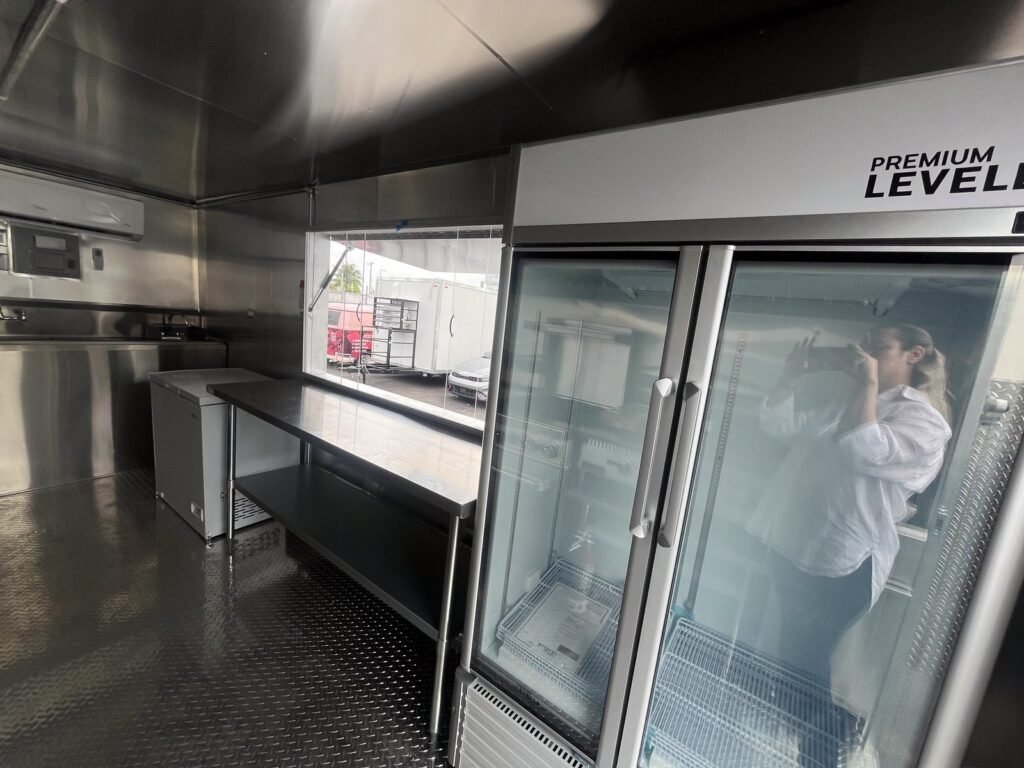
Shrimp, octopus and fresh fish have to hold at 41°F or below through the whole shift, and in a trailer with the fryer running a residential-grade unit will not do it. We install commercial undercounter refrigeration for raw product, a separate freezer for inventory, and a display ice well draining directly to the waste tank. Three pieces of equipment with three jobs — not one trying to do all of them.
Cold rail for cocktails and ceviche
A refrigerated insert rail up front lets you build a shrimp cocktail, campechana or ceviche in front of the customer without pulling product out of temperature. The inserts are stainless and lift out for washing — a detail inspectors check every time, because fixed inserts cannot be properly sanitized.
Fryers that recover fast
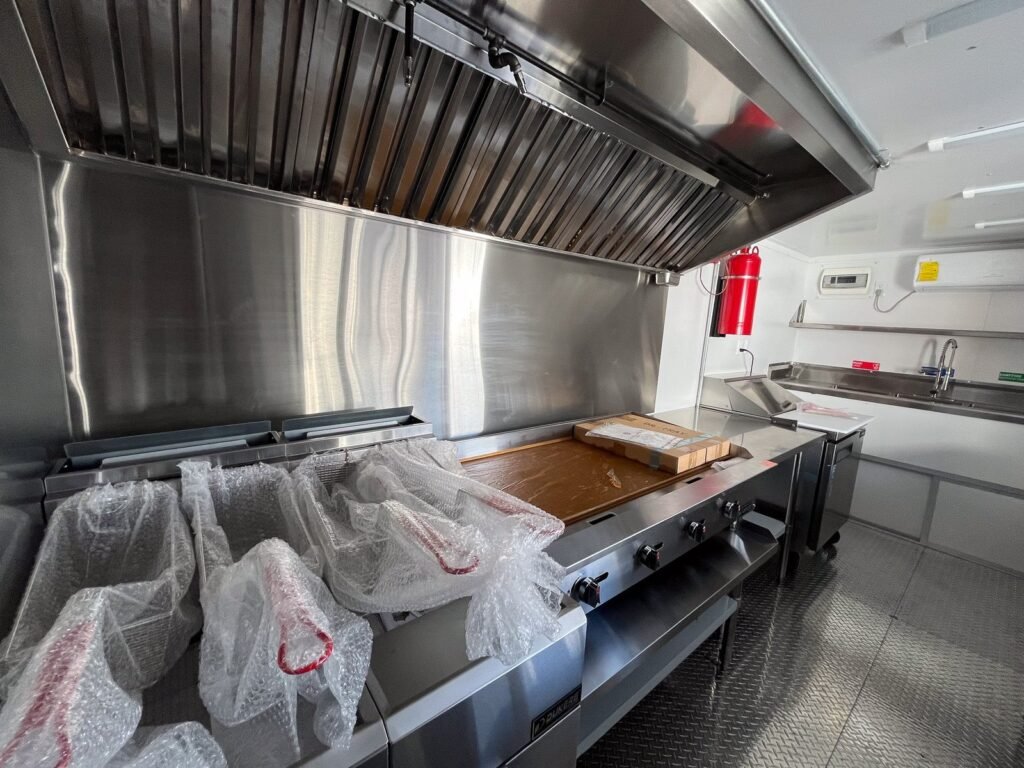
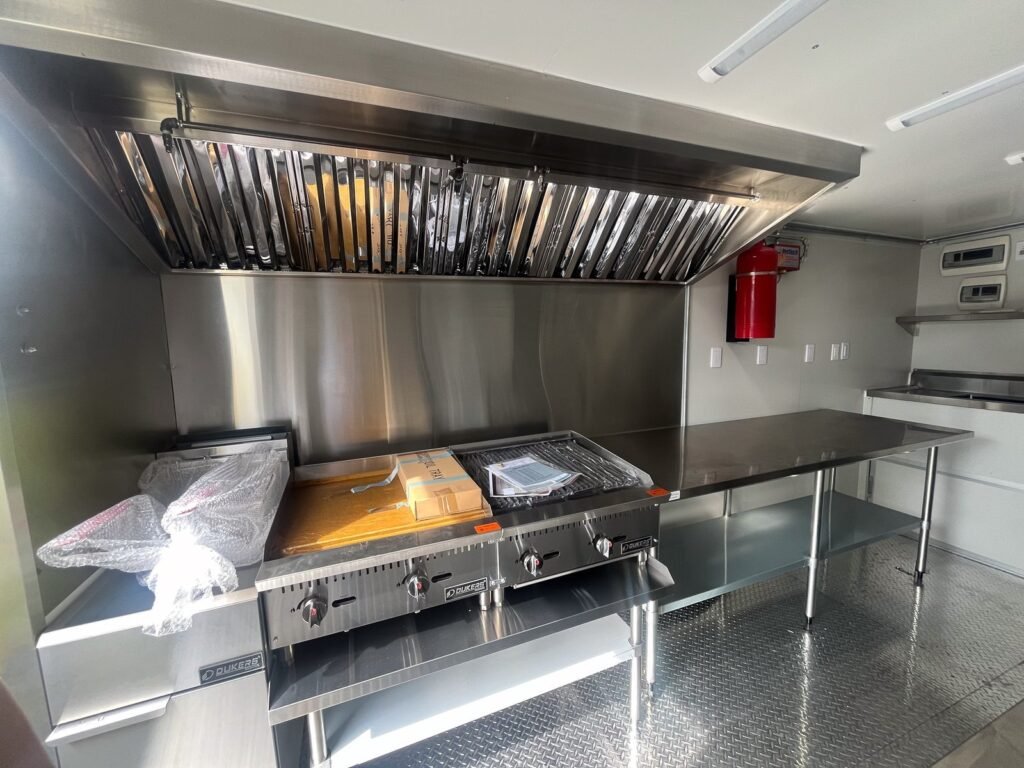
Breaded fish and battered shrimp drop oil temperature hard. We install double-basket fryers with fast recovery and a separate drain station, so the second batch does not come out greasy. They sit under the hood with fire suppression, same as a griddle.
Three-compartment sink and hand sink
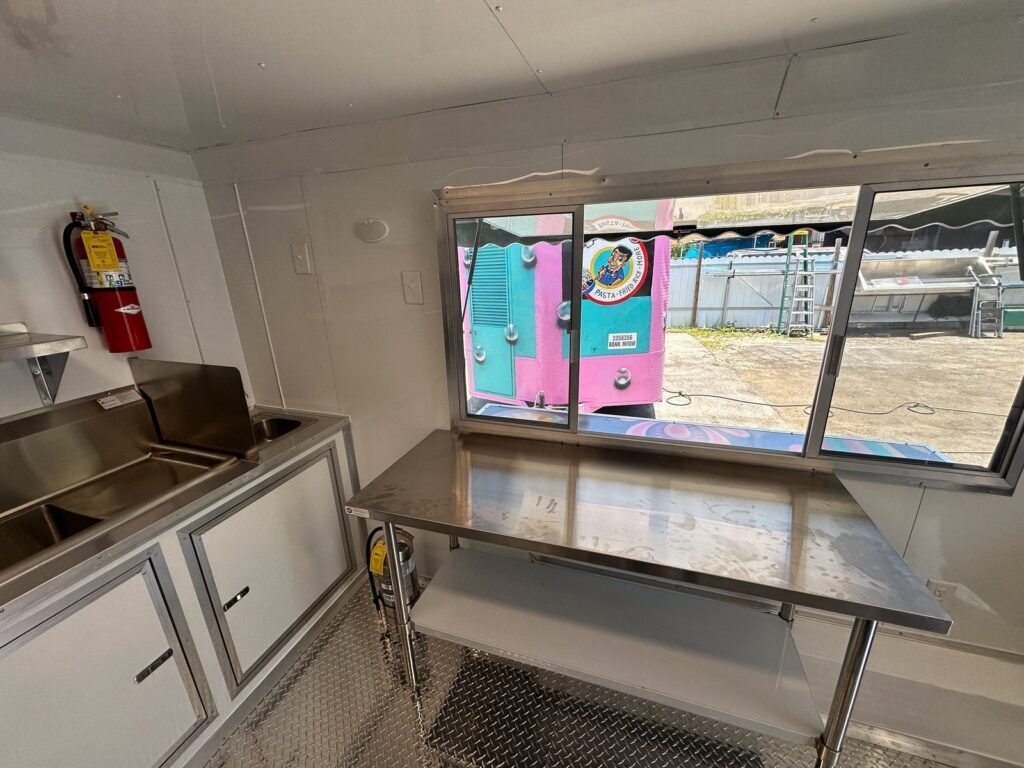
Non-negotiable in every state we deliver to: a three-compartment sink to wash, rinse and sanitize, plus an independent hand sink with hot water for hands only. On seafood trailers we size it with margin, because the dish volume is higher than on any other menu.
Water, drainage and odor
Fresh and waste tanks with waste always larger than fresh, welded flooring with coving up the walls so water cannot pool in the corners, and exhaust sized for fryer vapor. A poorly sealed floor in a seafood trailer smells within two weeks and never comes back.
Stainless throughout
Work tables, the wall behind the cook line and all splash surfaces in commercial-gauge stainless. It costs more than laminate and it is the only surface that survives daily sanitizer without pitting.
Refrigeration and drainage requirements vary by state and county. Confirm with your local health department before finalizing the layout.